

"Tuneless Numbers"
Reading Keats' "Psyche"

A couple of weeks ago, when reading Keats’ Urn poem, I made a few misstatements, in particular pertaining to the “Spirit ditties of no tone.” It’s no grave matter, and Keats, I’m told, is doing fine. In fact, just today I was reading his “Ode to Psyche,” and encountered something of a resonance with said past post:
“O Goddess! hear these tuneless numbers, wrung
By sweet enforcement and remembrance dear,
And pardon that thy secrets should be sung
Even into thine own soft-conched ear:
Surely I dreamt to-day, or did I see
The winged Psyche with awaken’d eyes?”
This tuneless music, I’m also told through No Tone, has ancient roots with Greek philosophers who believed that the celestial spheres, when moving, played an unheard music. Which makes some sense in Keats’ mind as he’s playing all these Attic shapes.
Do I Wake or Sleep?
Our speaker thinks he may have seen our Muse in a dream (“surely I dreamt to-day”) but the question is who is he asking? Like the audience in Shakespeare’s Tempest, Keats’ Prospero is perhaps speaking to us, but he’s just as well speaking to the very person of whom he’s intimated that he dreamt. That is, he’s speaking just as well of a vision created within his own Mind. Hence, the question is a secret sung “into thine own soft-conched ear” like the sound of the sea singing back to itself in so many shells of self that dwell across the shore.
Like the two imaginal lovers he meets in the wood near a brook “scarce espied,”
“I will be thy priest, and build a fane
In some untrodden region of my mind,
Where branched thoughts, new grown with pleasant pain,
Instead of pines shall murmur in the wind.”
That is, he’s invoking you, dear Goddess, but he’s perhaps doing so internally. Hence, again, silent, although not unsung. And possibly sung to himself, the way it’s made your ear, as your ear is perhaps a portal to the mind which has dreamt us, dreamt him. It is this mind that came across the lovers, “As if disjoined by soft-handed slumber,” and this mind that’s addressing the Soul now.
O latest born and loveliest vision far
That “pleasant pain” of the thought growing naturally, stretches out his branches across the vast sky of the Mind. Note how easily Keats can imagine a sensuous connection with the rest of the organic world, seeing just as much home for his soul (read: mind) in symbols of tree branch as he can with stately lines of verse. This is Romantic sensibility at its finest, a cousin of Coleridge spinning “a repetition in the finite mind of the eternal act of creation in the infinite I AM.”1 It could be inferred, too, that the branches of a “real” tree, acting in just such a way, is also creating in just such a way.
The mind of the Unknowable has a voice as yet unattuned to the human ear, but we can intimate that Grace of Creation when we allow our own silent voice to grow in repetition just as the whole of Nature does. So it is that the Romantic voice seeks a sense of communion with the natural world — it is similar to the Virtues of Epicurean worship, and like the Epicurean ideal of living in accordance with nature. But there is this further step — this embrace of desire as an educative principle, calling us ever deeper into the wood.
The lovers he sees
“lay calm-breathing, on the bedded grass;
Their arms embraced, and their pinions too;
Their lips touch’d not, but had not bade adieu,
As if disjoined by soft-handed slumber”.
Like Eve being broken from Adam as he sleeps (and does he dream?) the two figures are almost interlocked, but not quite. They accompany one another in desire, it’s implied, yet they do not fully come to kiss — but, neither, do they say goodbye. Like the tuneless numbers, like the imaginal players frozen on the Grecian Urn who never reach their destination, never play the ditties which their pipes so long to play, they are “ready still past kisses to outnumber.” Unlike Adam and Eve who would “multiply,” these players are as a motionless painting in the Mind, whose generations will become poems and new poems, from Shakespeare to Keats, and Keats to Wallace Stevens, and Wallace Stevens to us “in eternal lines to time.”
Let Me Be Thy Choir
As Keats grows this image of the lovers in the woods, embodied as they are by his own desire for Fanny (whom he knows he cannot marry), and threatened by the acid cynicism of a new industrial modernity that threatens all things spiritual, Keats knows in his heart of hearts that this desire is real:
“O brightest! though too late for antique vows,
Too, too late for the fond believing lyre,
When holy were the haunted forest boughs,
Holy the air, the water, and the fire;
Yet even in these days so far retir’d
From happy pieties, thy lucent fans,
Fluttering among the faint Olympians,
I see, and sing, by my own eyes inspir’d.”
“[T]hough temple thou hast none,” Keats is saying, though now in the saecular age there are no proper ways to worship his Goddess Muse Psyche, Keats knows this Spirit can live, has lived, and will live again — but not without effort and devotion on his part. “Let me be thy choir,” he pleads and later (as I mentioned before) “I will be thy priest” and “make a moan”
“Upon the midnight hours;
Thy voice, thy lute, thy pipe, thy incense sweet
From swinged censer teeming;
Thy shrine, thy grove, thy oracle, thy heat
Of pale-mouth’d prophet dreaming.”
That pale mouth—unkissed and frozen in a mortal grave, but with the silent voice of a dreaming prophet—serves as portal for the words and songs of a gone yet still living world. And yet the mind, full-breasted with gusts of Sancte Spiritus, reconciles that frozen poet with the warmth of the Good, Beautiful, and True.
And there shall be for thee all soft delight
That shadowy thought can win,
A bright torch, and a casement ope at night,
To let the warm Love in!
Soli Deo Gloria
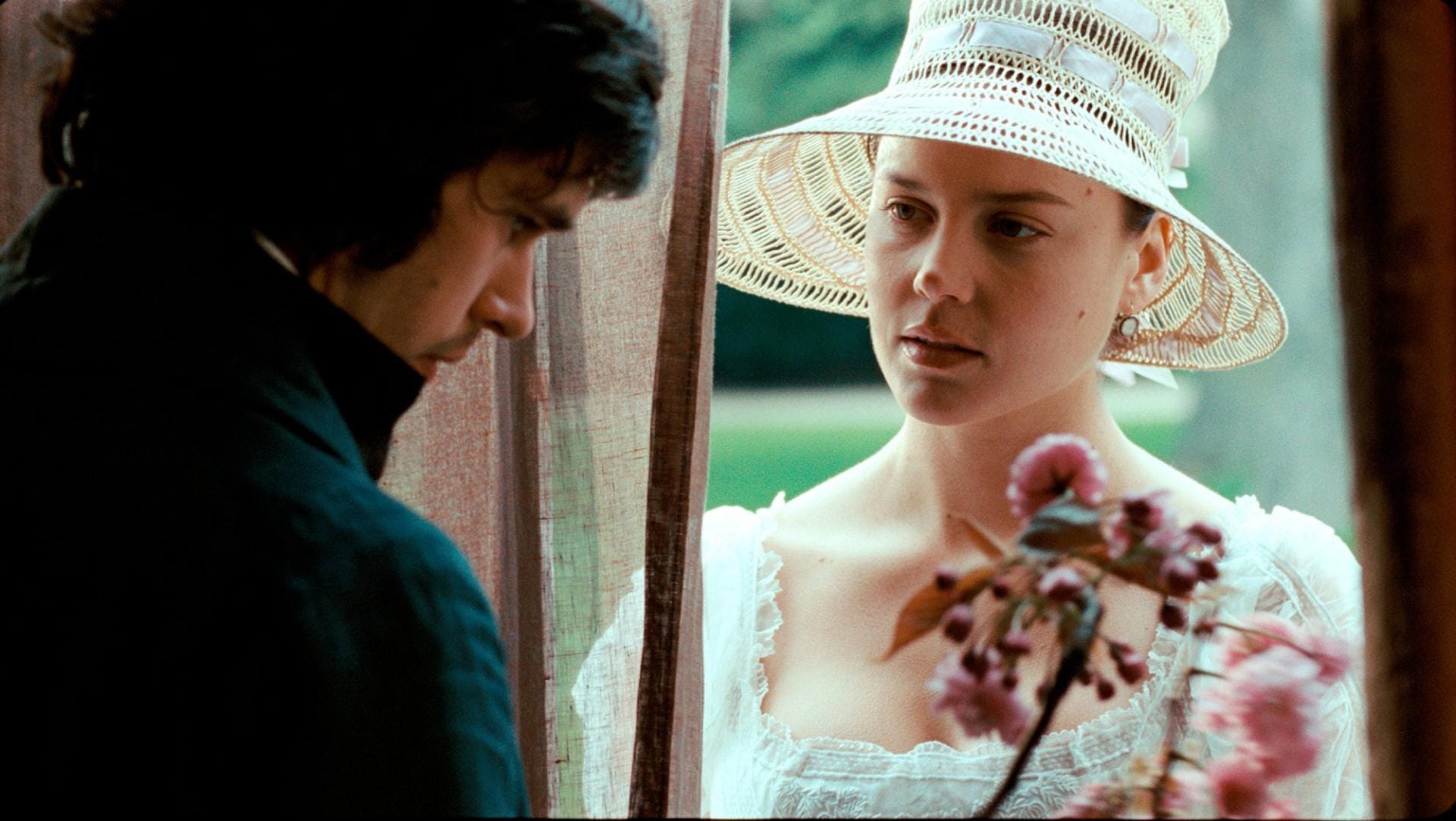
If you’d like to see some great cinema that gets at a lot of these feelings, I recommend with ardor Bright Star (Jane Campion, 2009), starring Abbie Cornish and Ben Whishaw. At several moments in the film, Campion exemplifies a deep knowledge of these themes, and depicts them with splendorous intensity. Additionally, she creates her own unique capacity to trigger sensuous responses much in the way that Keats does with the music of his verse, something I have not been bringing enough attention to in my interpretations.
Biographia Literaria. Chapter 13.